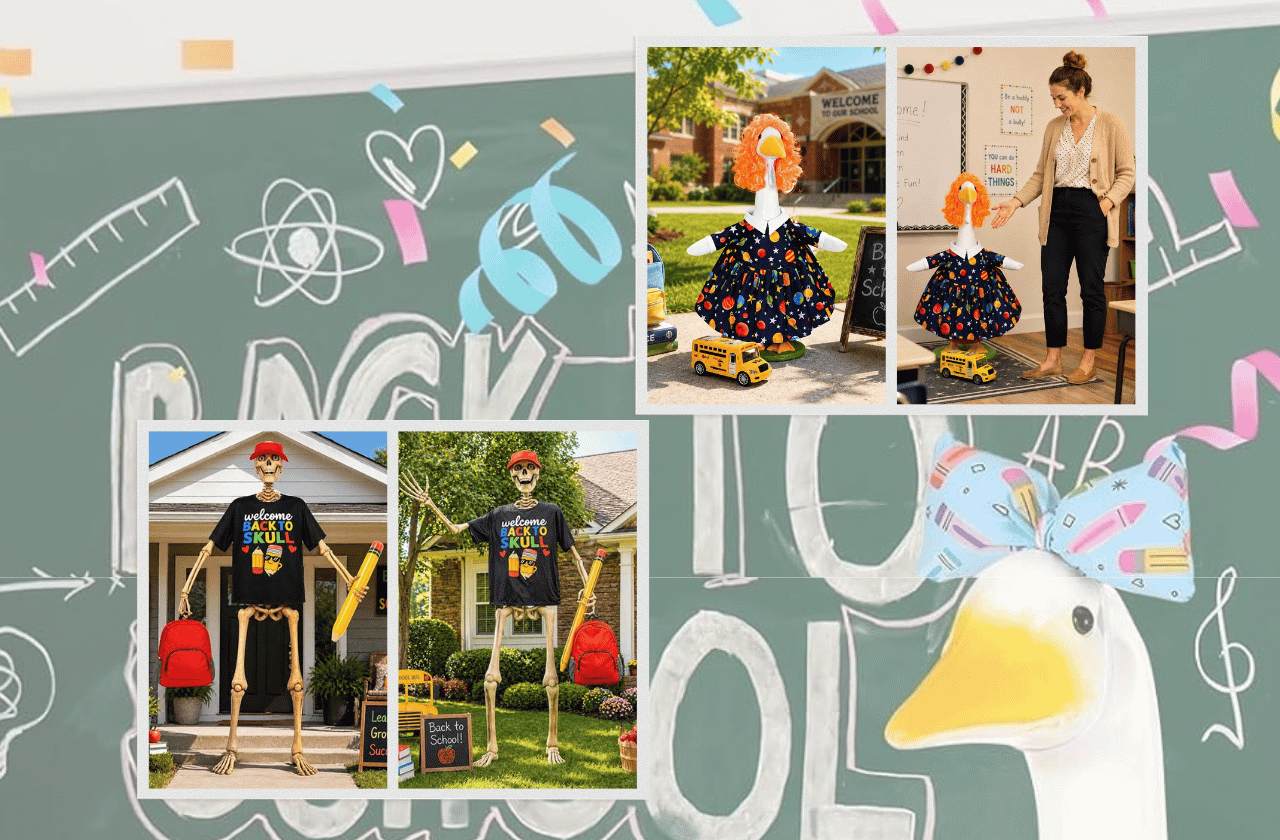
From vigilant farmyard sentinel to seasonal fashion icon on the suburban porch, and now to a miniature muse on the modern desk—the evolution of the lawn goose ornament is a micro-history of American material culture. How has this unassuming geese adapted across centuries to new living patterns and cultural psychologies? This guide delves into its agricultural origins, dimensional evolution, material science, and the deeper cultural forces at play.
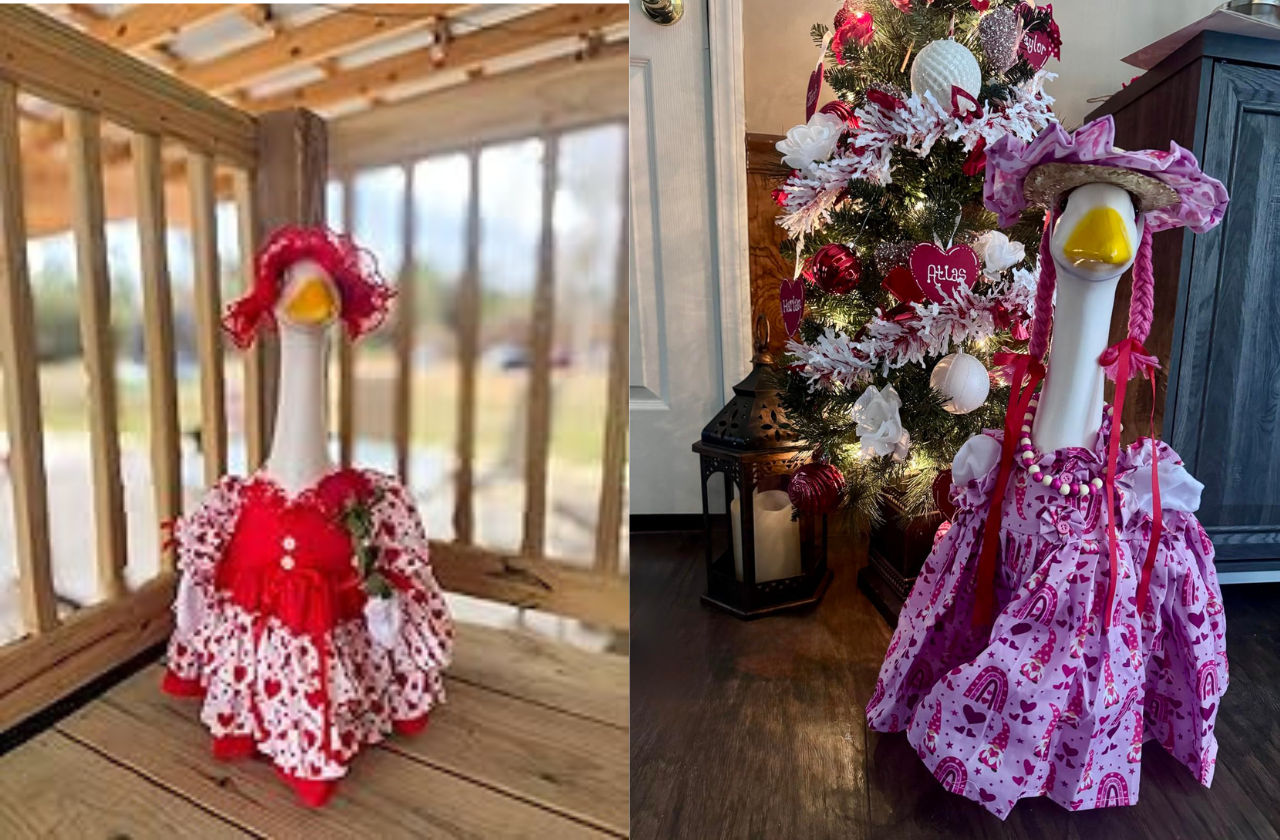
Table of Contents
Agricultural Roots — The “Guard Goose” as Functional and Symbolic Origin
To understand the porch goose, look to life on the old farm. This isn’t just a story—it grew from how geese behave and what people needed.
Geese are natural watchdogs
Domestic geese didn’t just happen to guard—they’re made for it. They have three key traits:
- Excellent night vision – they see much better in the dark than we do.
- Strong territorial instinct – they work together to protect their space.
- A loud, unmistakable alarm call – their honk can wake up a whole house.
In 19th and early 20th-century rural America, especially in Midwestern communities of German, Dutch, and Scandinavian immigrants, live geese were often used as “living alarm systems” to guard chicken coops, gardens, and yards. Their value was even written about in early farming guides.
From Practical Guard to Powerful Symbol
As farm life became more settled, the goose’s role went beyond just being useful. It became a strong symbol of watchfulness, protection, and a thriving home. This idea meant a lot to immigrant communities and to a farming society that prized safety and self-reliance. The goose was now more than a bird; it was a sign of a safe household.
This symbol first appeared not as a lawn ornament, but in folk art—on weathervanes, in painted barn signs (like the Pennsylvania Dutch hex signs), and in European-style garden statues. The path was paved for it to become a standalone figure in the yard.
The Dimensional Evolution: From Life-Sized to Desktop Miniatures
Size Classification & Applications Guide
The porch goose’s physical transformation follows a clear path of miniaturization, mirroring our changing relationship with space and tradition.
Historical Proportions
Early 20th-century concrete geese typically measured 24-36 inches tall—proportioned to resemble actual domestic geese (which stand 20-30 inches at the shoulder). These life-size lawn ornaments served as symbolic replacements for living guard animals. Their imposing presence was intentional: they were meant to be seen from the street, asserting their protective role.
The Miniaturization Timeline
1950s-1970s: Standardized at 24-30″ tall, cast in concrete or plaster.
1980s-1990s: Introduction of 12-18″ “porch model” geese as suburbs expanded.
2000s-2010s: 6-12″ decorative geese for garden beds and indoor display.
2010s-Present: 3-6″ “desk goose” phenomenon, with specialized outfits.
- All
- Gallery Filter
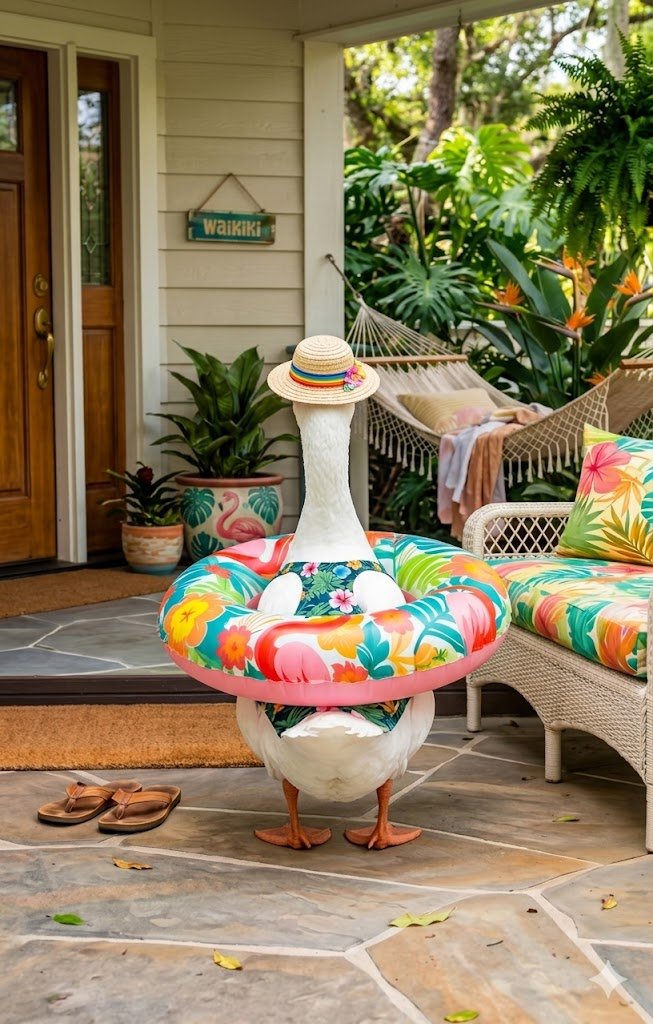
Porch goose with clothes
23″ Goose Figurine Summer Outfits, Pay just 78% from $13.99, lowest price on prime day.
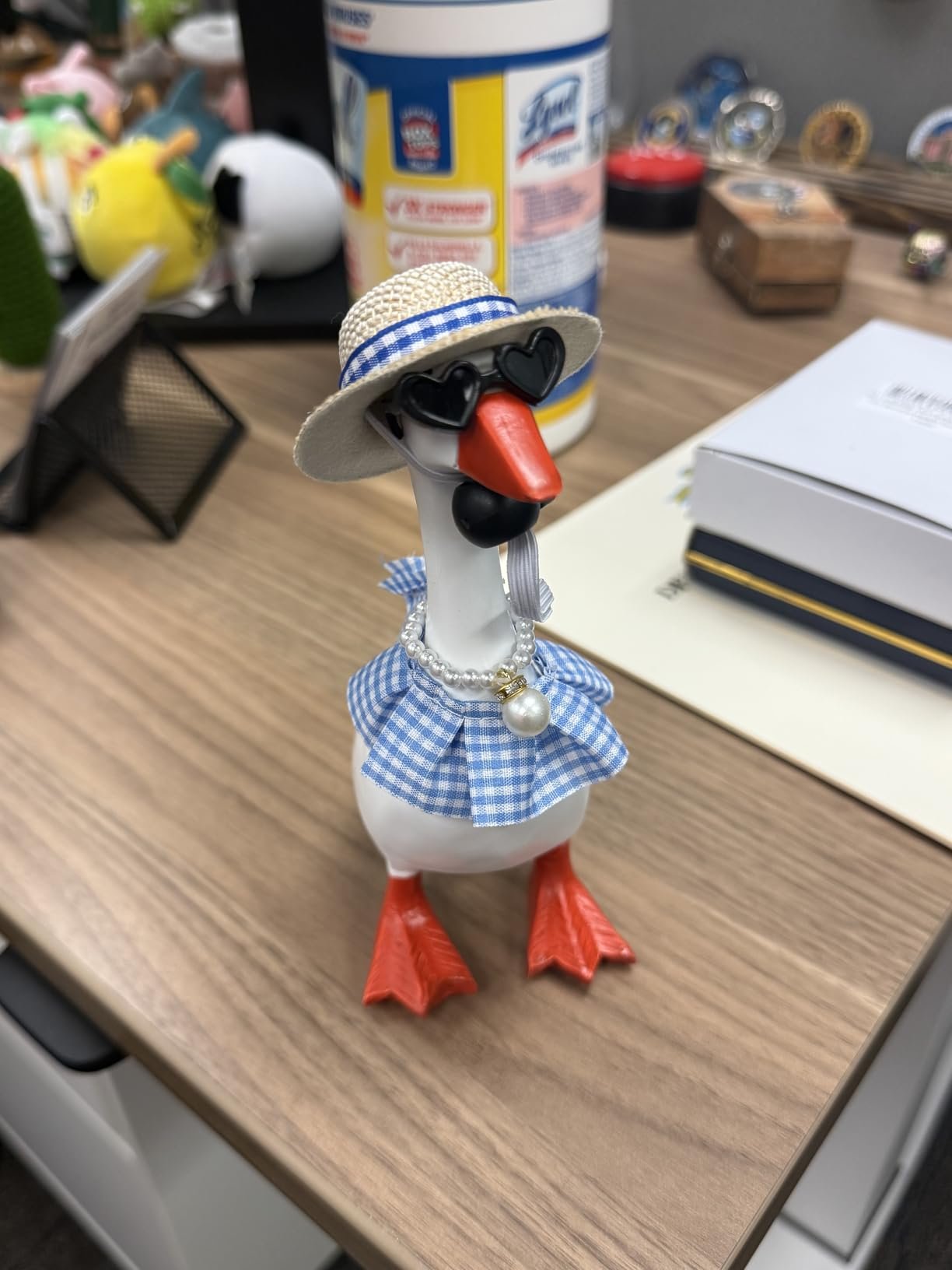
The Desk goose outfits
7-inch Magnetic Costumes
4 Sets Desk Goose Clothes, Pay just 85% from $16.98
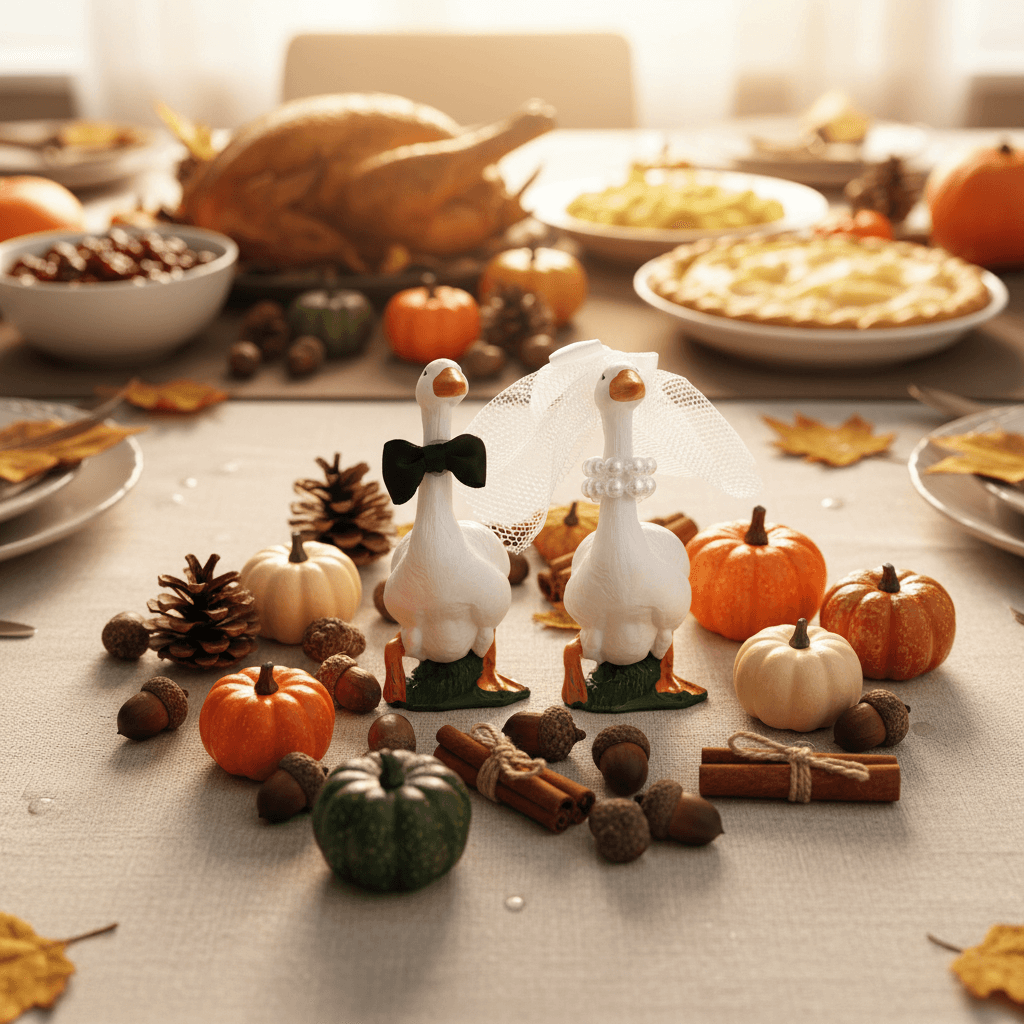
Mini goose cake topper
With a compact footprint of 2.36 x 2.36 x 1.18 inches, Save 7% from $12.99
Each material choice represents a different era of technology, aesthetics, and function.
| Material | Era of Prominence | Characteristics | Cultural Significance |
|---|---|---|---|
| Concrete | 1940s-present | Heavy, durable, weather-resistant, develops a patina. Prone to cracking. | The original material; represents authenticity, permanence, and tradition. |
| Cast Stone | 1970s-present | Crushed stone bound with resin; finer detail than concrete, lighter, weatherproof. | The “premium” traditional option. |
| Fiberglass Resin | 1990s-present | Lightweight, highly detailed, excellent weather resistance, easy to mass-produce. | Democratized ownership; enabled the move to apartments and smaller spaces. |
| Ceramic/Pottery | All eras (esp. indoor) | Fine detail, glazed finishes, fragile. Often used for miniatures. | Connects to folk art traditions; the “art object” evolution. |
| Plastics/Polymer | 2010s-present | Extremely affordable, consistent detail, very lightweight. | Enabled viral desk goose culture through low-cost accessibility. |
Key Transition Points
The most significant cultural shift occurred when geese moved from the 36″ guardian category to the 18-24″ porch standard—this represented the physical transition from rural farmsteads to suburban developments. The shift to desk miniatures reflects fundamental changes in how we work and socialize in a digital era.
Material Science & Manufacturing Eras
Each material choice represents a different era of technology, aesthetics, and function.
| Material | Era of Prominence | Characteristics | Cultural Significance |
|---|---|---|---|
| Concrete | 1940s-present | Heavy, durable, weather-resistant, develops a patina. Prone to cracking. | The original material; represents authenticity, permanence, and tradition. |
| Cast Stone | 1970s-present | Crushed stone bound with resin; finer detail than concrete, lighter, weatherproof. | The “premium” traditional option. |
| Fiberglass Resin | 1990s-present | Lightweight, highly detailed, excellent weather resistance, easy to mass-produce. | Democratized ownership; enabled the move to apartments and smaller spaces. |
| Ceramic/Pottery | All eras (esp. indoor) | Fine detail, glazed finishes, fragile. Often used for miniatures. | Connects to folk art traditions; the “art object” evolution. |
| Plastics/Polymer | 2010s-present | Extremely affordable, consistent detail, very lightweight. | Enabled viral desk goose culture through low-cost accessibility. |
Dress It, Love It, Mini Geese Became Creative Home Tradition
From Tradition to Today’s Trend
The old lawn goose has moved closer to us—onto porches, doorsteps, and tabletops. It’s smaller now. Cuter. And way more fun to dress up!
This “guardian” has become a friendly companion. It shares our daily life. A new outfit can show your mood. It can celebrate a holiday. It can make guests smile. That’s why goose décor is trending again. It’s an old tradition made fresh and personal. Something you can touch, play with, and truly make your own.
Our Valentine’s Day & Cosplay Outfits
That’s exactly what we celebrate with our goose outfits. This Valentine’s Day, we’ve designed sweet, playful looks with a cosplay twist—all in fun “goose style.” Think tiny capes. Cute couple sets. Character costumes. Your quiet yard goose becomes a loving little companion.
Put it by the door. Set it on the table. Place it in the window. Let it “celebrate” the holiday with you!
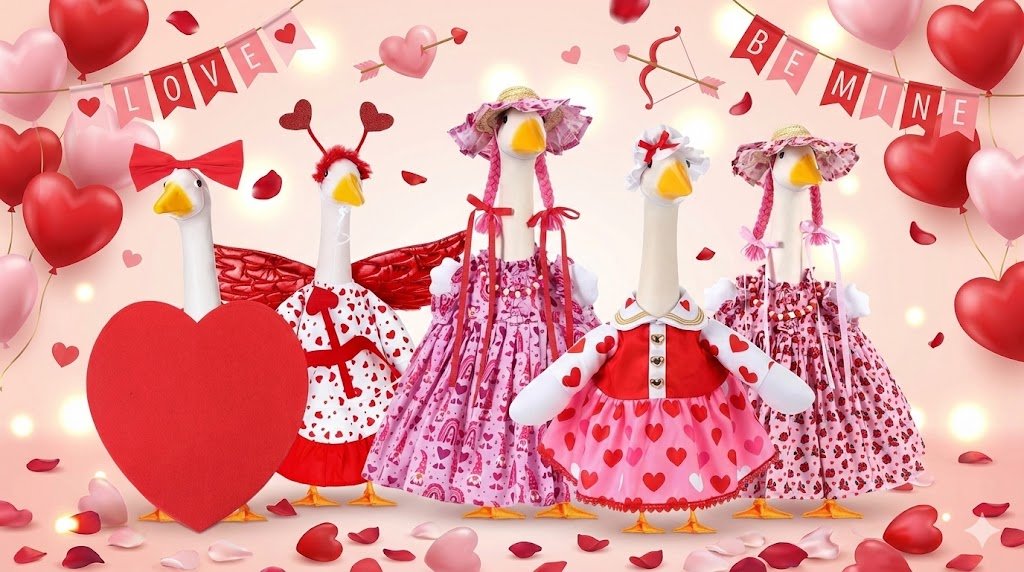
What’s more, love DIY? Add your own ribbons, buttons, or hand-sewn details. Make it yours. Your goose isn’t just a decoration anymore. It’s a small, happy part of the family—dressed and ready for every season and every story.
FAQs about Porch Goose Outfits
According to the sources, geese were historically treasured by farmers for their courage and valiance. They acted as “watchdogs” of the farm, known to honk at and chase off predators. This reputation for being fearless guard birds is also reflected in global folklore, such as “The Goose that Laid the Golden Eggs”,. Dressing them up serves as a playful nod to their status as protective guardians of the home.
While the exact origins are described as “murky,” the trend gained significant traction in the 1980s. It most likely originated in Ohio or Pennsylvania,. Business owners in the 80s recall being told by customers about a “fad” where sisters were making goose clothes, which quickly “exploded” into a major commercial market.
The variety of clothing is extensive and limited only by the owner’s creativity. Common outfits include:
• Seasonal/Holiday attire: Halloween costumes, St. Patrick’s Day outfits, and rain slickers.
• Sports & Identities: Team jerseys and even patriotic themes like George Washington for a presidential inauguration.
• Humorous/Casual: Bikinis, hippie garb, lederhosen, wigs, and even properly-sized face masks.
Yes, the sources indicate that the trend is experiencing a resurgence through social media. While some people once viewed it as “tacky,” TikTok influencers are now sharing videos of their dressed-up geese with new audiences,. The tradition is often passed down through generations, with many current owners inheriting their “guard birds” from their grandmothers
- 📝 Our opinions are never for sale.
- 💡 We share the good, the bad, and the ugly.
- 🔍 We test products independently—brands don't pay for placement.